
< Back to home


Unlock the Power of Animation to Tell Engaging Medical Stories
2
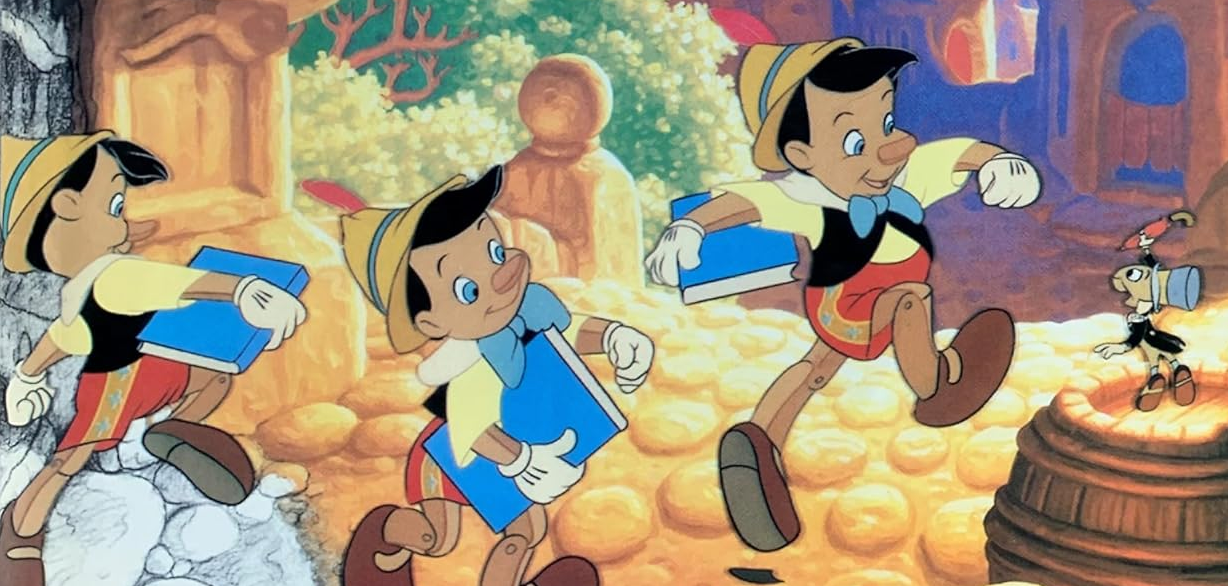
Stories are key to engaging our medical audience with amazing science. As a motion designer for Inizio, one of my main tasks is producing engaging animations for a range of audiences. However, it’s not just about making things move; it’s about making those movements feel alive, this is key to making an animation resonate with the audience and our clients.
There are 12 Principles of Animation that serve as the foundation for all good animation, and we try to follow them with each project. As collaboration is at the heart of what we do, we want to share these with you to equip you with the knowledge for your client projects.
These principles, first outlined by Walt Disney animators Frank Thomas and Ollie Johnston in their 1981 book The Illusion of Life, have become the bedrock of animation theory. While many of these ideas were initially conceived for traditional 2D animation, they have since been adapted and remain just as relevant in modern 3D animation and other digital mediums.
Here are the 12 principles of animation in more detail.
1. Squash and Stretch
We use squash and stretch to make objects feel more alive. When an object moves, we stretch in one direction and then squash in the opposite direction. This gives the appearance of flexibility and weight.
2. Anticipation
Anticipation is about preparing the audience for an action that’s about to take place. Before a character makes a big jump, for example, they might crouch down first, creating the expectation that something is about to happen.
3. Staging
Staging is about making sure that the audience’s attention is focused on what’s important in a scene. This will usually be developed in the concept stage of our workflow, but is key to making sure the audience knows where to look and what is the most important information.
4. Straight Ahead Action and Pose-to-Pose
These two approaches refer to different methods of creating animation.
- Straight Ahead Action involves drawing each frame in sequence from start to finish, creating a more fluid and spontaneous motion. This is a more time-consuming technique but can produce great results.
- Pose-to-Pose involves creating key poses first and then filling in the in-between frames. This approach allows for more control over the timing and consistency of movement and is particularly useful for complex actions or when a specific story beat needs to be emphasised.
Different situations call for different approaches, and we select which method will produce the best results on a case-by-case basis.
5. Follow Through and Overlapping Action
These principles refer to how different parts of a character or object continue moving after the main action has been completed.
This helps give the animation a kind of continuous natural motion.
6. Slow In and Slow Out
When an object starts or stops moving, it usually accelerates or decelerates. In the book this is called Slow In and Slow Out, but it is often referred to as easing.
The Idea is to have anything moving start and finish its movement slowly to more closely mimic real life.
7. Arcs
Natural movement tends to follow a curved path rather than a straight line. This again, similarly to slow in and slow out, helps an animation feel more realistic by closer mimicking real-life motion paths.
8. Secondary Action
This means adding a second action to a main animation. It works kind of like a flourish. It gives the animation more personality and sets the tone of the animation.
9. Timing
This refers to the speed of an animation. It can be used to give momentum to objects, or convey a certain emotion.
10. Exaggeration
Exaggeration is used to heighten an emotion or an action, it doesn’t necessarily mean making everything outlandish, but rather enhancing the physicality of a motion to make it more dynamic.
11. Solid Drawing
This is covered before it reaches the motion team, by the wonderful concept department. They produce the high-quality graphics that form the basis of an animation
12. Appeal
Similar to the point above, this is about ensuring the animation is nice to look at and conveys the right tone to the audience from the graphics or animation.
Let’s start a story for your client. Contact Dannii Brennan.
Book in work

Got an idea for an article?
Co-author with us
Co-author with us
- Interactive learning module demo*
- Creative Credentials
- Publication offerings
- 2D animation showreel
- 3D animation showreel
- PowerPoint showreel
- Interactive and booth attractions*
- Scrolling video demo*
- Quiz game demo
- NFC technology demo*
- 360 Gallery (VRLite) demo*
- Ashfield Arcade - demo games*
- Synthesia guide & demo's
* Login Details:
Username: ashfield
Password: amccreative

Who is in my pod?
Alternatively, View the whole team

Hannah Tooth
Creative Planning Manager
Whitney Sherratt (Maternity Leave)
Creative Lead

Jake Johnson
Senior Designer

Lottie Newall-Smith
Creative Artwork Lead

Freya Nicolaysen
Presentations Designer

Alex Ford
Creative Operations Lead

Abi White
Associate Creative Director

Hannah Magill
Creative Artwork Lead

Geri Aleksandrova
Senior Creative Artworker
Danielle Greaves
Creative Artworker

Robbie Macoy
Presentations Lead

Zoë Dixey
Creative Planning Manager

Staci Hocknell
Senior Concept Designer

Pete Dewhurst
Senior Creative Artworker

Sam Berndt
Presentations Designer






 Not sure? - Why not start a conversation by using the links on the home screen.